In the modern landscape of high-performance permanent magnets, selecting the ideal manufacturing process is no longer just about magnetic strength; it’s about balancing mechanical precision, thermal stability, and cost-efficiency. For engineers and procurement specialists at companies like maglastic.com, two technologies stand out: Compression NdFeB (Neodymium Iron Boron) and Injection Molded NdFeB Magnets.
While both fall under the category of bonded magnets, their production DNA and performance ceilings differ significantly. This guide explores which one suits your specific application.
The Core Science: Magnetic Compounds and Binders
At the heart of both technologies is the "Bonded" concept—suspending magnetic powder within a polymer matrix. However, the ratio of powder to binder is the primary differentiator.
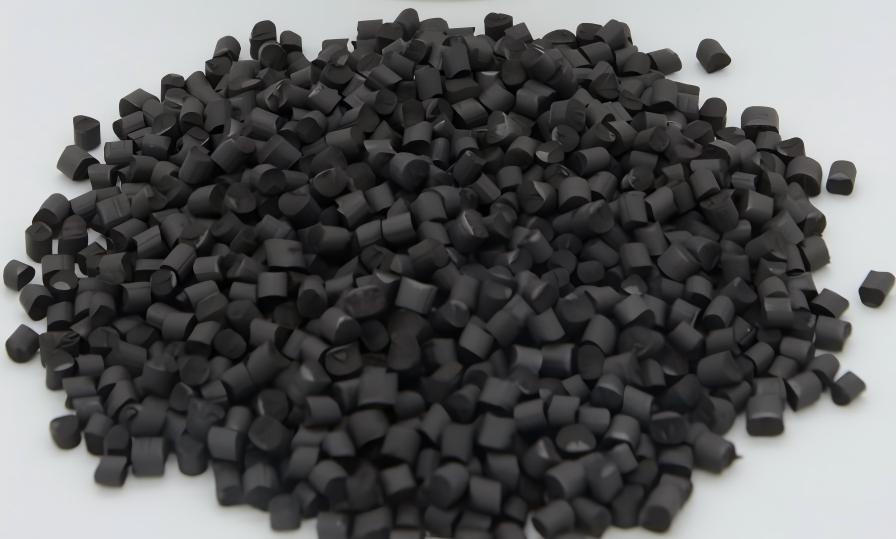
The Binder Factor: At Maglastic (Chase Technology), we utilize different binders like Nylon (PA6, PA12), PPS (Polyphenylene Sulfide).
PPS for Extreme Conditions: For automotive or industrial environments, PPS binders offer superior chemical resistance and can withstand continuous operating temperatures that would degrade standard plastics.
Manufacturing Process: Compression vs. Injection Molding
Understanding the "How" explains the "Why" behind their physical limits.
1. Compression Bonding (The "Press" Method)
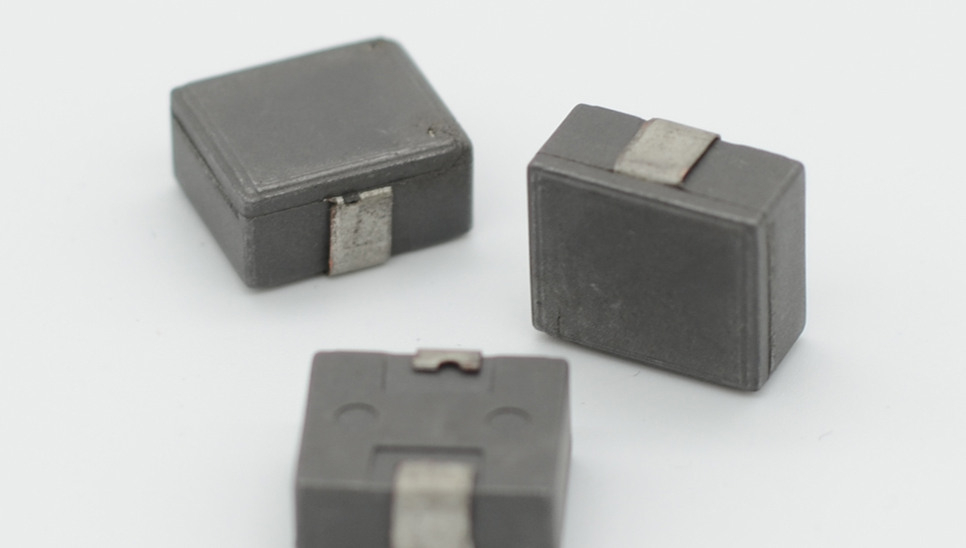
This involves mixing magnetic powder with a small amount of epoxy resin and cold-pressing it into a die.
Density: It achieves higher density (approx. $6.0 \text{ g/cm}^3$), meaning more magnetic material in the same volume.
Shape: Limited to simple geometries like rings, blocks, or cylinders.
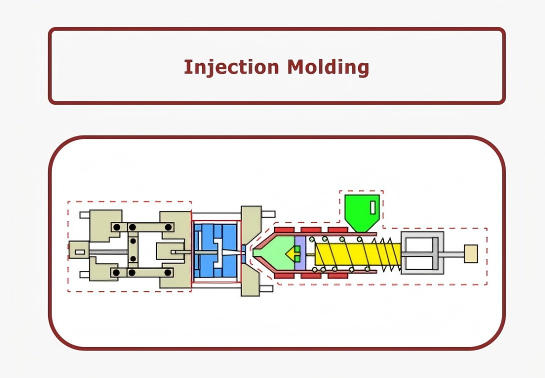
2. Injection Molding (The "Form" Method)
The magnetic compound is heated until molten and injected into a precision-engineered mold.
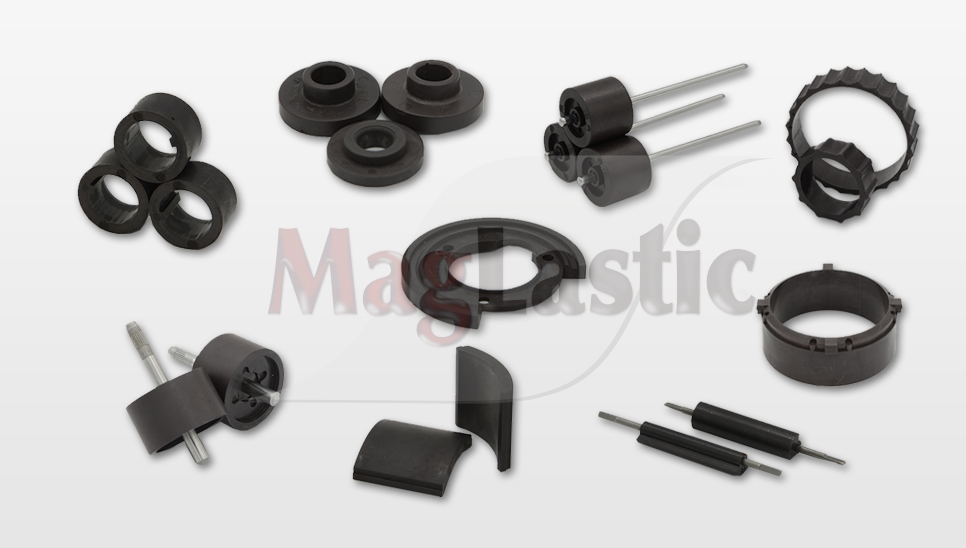
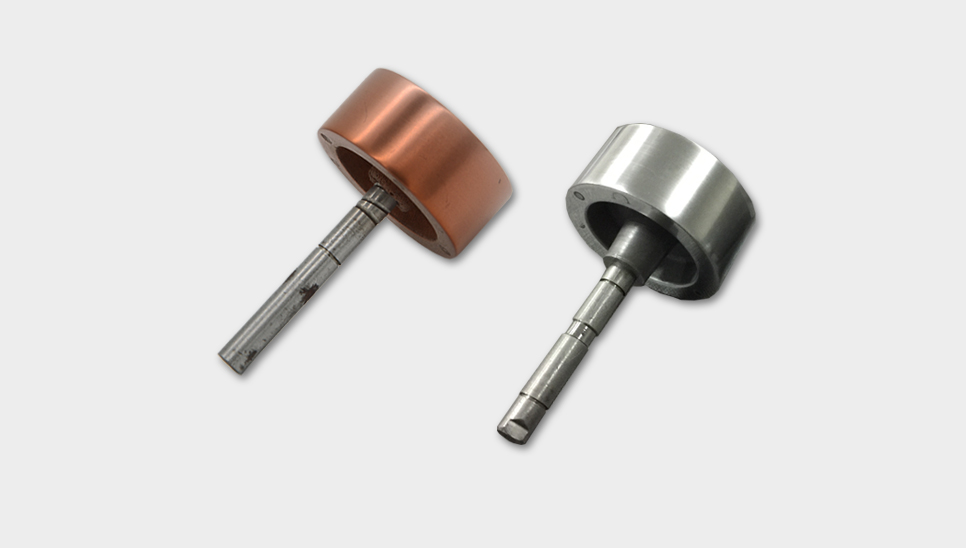
Integration: You can perform Insert Molding, where the magnet is formed directly onto a steel shaft, gear, or sensor housing.
Precision: It achieves tolerances as tight as $\pm 0.02\text{mm}$, often eliminating the need for post-process machining.
Magnetic Performance Curve & Geometric Complexity
Magnetic Energy: Compressio NdFeB typically offers a Max Energy Product(BH )max of 8-10 MGOe. Injection molded versions, due to the higher binder content, isotropic ones usually range from 3-8MGOe, anisotropic ones can reach to 15MGOe at maximum.
Multipolar Orientation: Injection molding allows for complex, multi-pole magnetization (e.g., 24 poles on a tiny ring) with extreme accuracy, which is vital for high-resolution sensors.
Comparative Analysis: Which One Should You Choose?
To help you decide, we have summarized the key metrics below:
Feature | Compression NdFeB | Injection Molded NdFeB |
Max Energy Product (BH)max | High (8-10 MGOe) | Medium (2-15 MGOe) |
Shape Complexity | Low (Simple Rings/Blocks) | Extremely High (Complex 3D Gears/Thin walls) |
Dimensional Tolerance | Moderate (May need grinding) | Excellent (Net-shape production) |
Mechanical Strength | Fragile (Prone to chipping) | High (Tougher due to polymer matrix) |
Tooling Cost | Moderate | Higher (Precision molds) |
Real-World Applications: From Consumer Electronics to EV Motors
Where Injection Molding Wins:
In the Automotive industry, particularly for Brushless DC (BLDC) motors and Position Sensors, injection molded magnets are the gold standard. Their ability to be molded directly onto shafts reduces assembly steps and prevents "magnet detachment" issues at high RPMs.
Where Compression Bonding Wins:
In Precision Micro-motors (like those in hard drives or high-end cameras) where maximum torque is needed in a tiny, simple cylindrical space, compression bonded NdFeB remains the preferred choice.
Why Partner with Maglastic for Your Magnetic Solutions?
At Maglastic (Chase Technology), we don't just provide magnets; we provide material science solutions. Our in-house compounding capability allows us to adjust the "recipe" of the magnetic compound to meet your specific temperature, strength, and magnetic requirements.
Whether you are in the early R&D phase or ready for mass production, our team of experts can help you optimize your design for the most cost-effective manufacturing path.
 CN
CN


 Other Functional Composite Materials
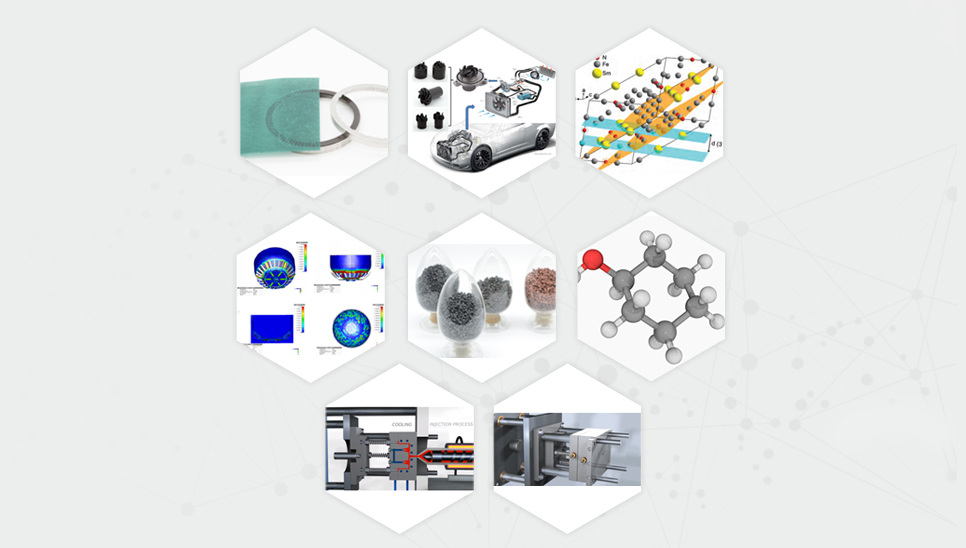
In addition to bonded magnetic compounds, we can also cooperate with customers to develop customized functional composite materials, such as high-density compounds and metal bonded plastic. We are committed to providing customers with new user experience and different design inspiration.
Other Functional Composite Materials
In addition to bonded magnetic compounds, we can also cooperate with customers to develop customized functional composite materials, such as high-density compounds and metal bonded plastic. We are committed to providing customers with new user experience and different design inspiration.
 Call us on:
  Email Us:
  1F, Building 3, NO.77 Gaoxin 13 road, Xiaoshan district, Hangzhou