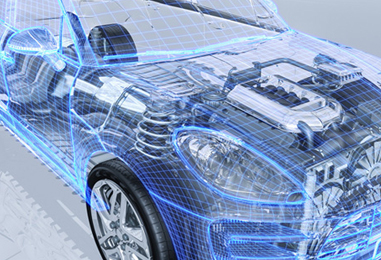
The automotive sector is undergoing its most radical transformation in a century. As electric vehicles (EVs) phase out internal combustion engines, the demand for precision control, lightweight architecture, and electronic sub-systems has surged exponentially.
At the heart of this electric revolution lies an unsung hero: Injection molded bonded Neodymium (NdFeB) Magnetic Compounds. Unlike traditional massive, heavy sintered magnets, these injection-molded composite materials are enabling a new generation of EV sensors and micro-motors — delivering geometric freedom, dimensional precision, and integration efficiency that sintered alternatives cannot match.
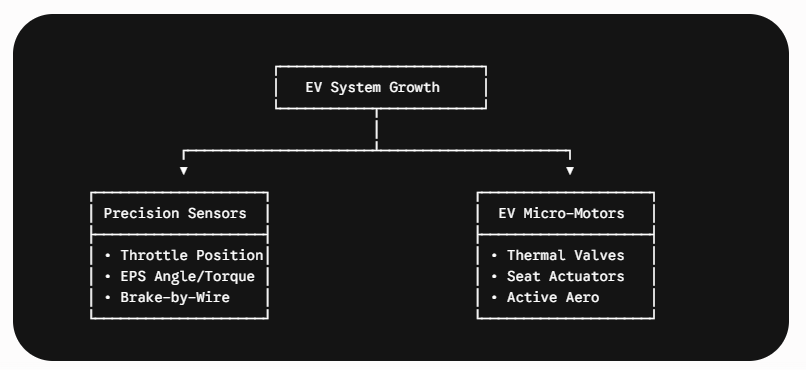
The EV Dilemma: Shrinking Spaces, Rising Component Density
Modern EVs require dozens of micro-motors and smart sensors to manage thermal systems, powertrain control, and advanced driver-assistance systems (ADAS). Sintered NdFeB magnets, while offering high energy density, present structural limitations in these applications: they are inherently brittle, require costly secondary machining to achieve tight dimensional tolerances, and are prone to eddy current losses in high-frequency operating environments.
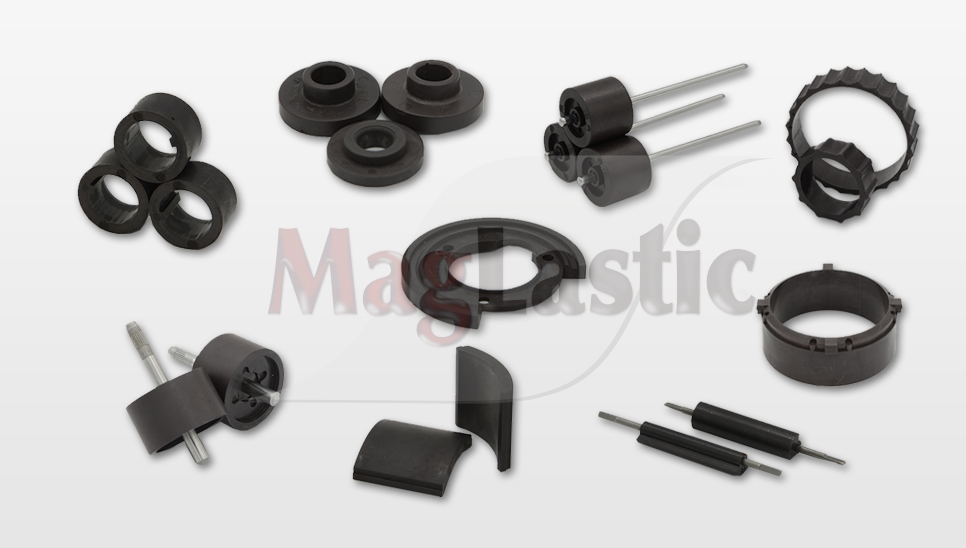
Injection molded bonded NdFeB magnetic compounds address these constraints directly. By embedding isotropic or anisotropic NdFeB powders directly into polymers — typically PA12 or PPS — manufacturers can injection-mold geometrically complex, net-shape magnetic components with repeatability in the micron range, eliminating post-mold machining in most cases.
Key Applications of Injection Molded Bonded NdFeB in Modern EV Architectures
1. Electronic Expansion Valves (EEVs) in Thermal Management Systems
Battery longevity and cabin comfort in an EV depend heavily on precise refrigerant control. Electronic expansion valves utilize micro-step motors driven by injection-molded bonded NdFeB rings. The net-shape molding process enables multi-pole magnetization patterns on a single ring — including radially oriented or Halbach-array configurations not easily achievable with sintered alternatives — allowing the valve actuator to execute fine, repeatable adjustments to coolant flow with minimal positional error.
2. EPS (Electric Power Steering) Torque and Angle Sensors
Safety-critical systems like Electric Power Steering require consistent signal fidelity across the full operating temperature range. Injection Molded Bonded NdFeB magnets are molded directly onto sensor shafts, which ensures excellent dimensional stability. This reduces harmonic distortion in the output signal, supporting reliable torque and angle measurement within the system's specified accuracy band.
Why Automotive Tier-1 Suppliers Prefer Injection Molded Bonded Compounds
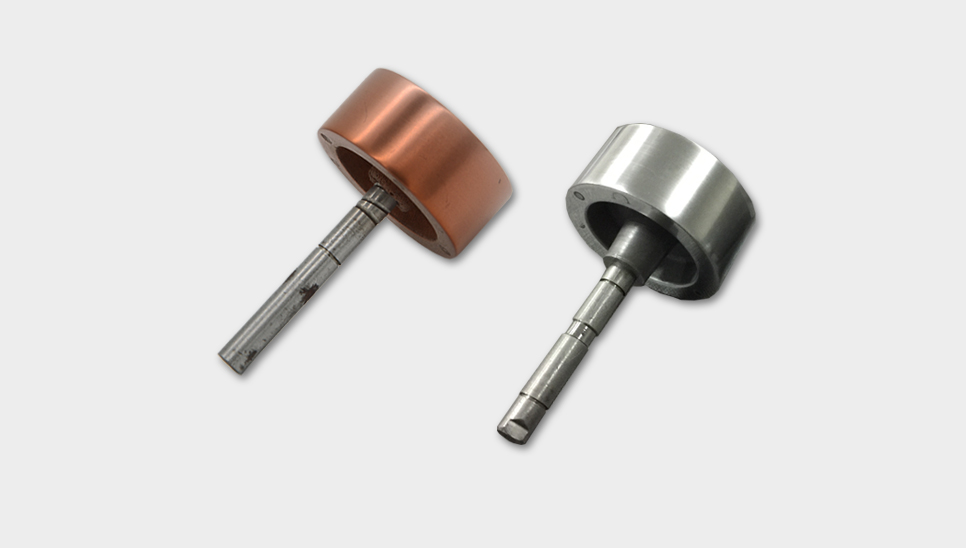
l Integrated Assembly (Overmolding): Bonded compounds allow for injection overmolding. A magnetic compound can be injected directly onto a steel shaft or plastic housing in a single production step, eliminating downstream adhesive bonding, balancing, and manual assembly phases.
l Elimination of Eddy Currents: In high-frequency motor environments, the polymer matrix electrically isolates individual magnetic particles, yielding bulk resistivity orders of magnitude higher than sintered magnets. This translates to measurably lower iron losses and reduced operating temperature in the motor assembly — a meaningful advantage as EV powertrains push rotational speeds upward.
l Improved Corrosion Resistance-No Coating Required: Sintered magnets require electroplated coatings (like NiCuNi or Epoxy) to prevent catastrophic oxidation. Injection molded Bonded NdFeB compounds,encapsulated within PA12 or PPS resin, demonstrate significantly improved resistance to moisture ingress and salt spray exposure under standard automotive testing conditions, eliminating the coating process step and the associated risk of coating delamination in service.
Summary: Shaping the Future of E-Mobility
As vehicle architectures become smarter and more compact, the value proposition of injection molded bonded NdFeB compounds becomes undeniable. They give automotive engineers the geometric freedom to design sub-systems that are lighter, more reliable, and highly scalable.
Accelerate Your Automotive Designs: Maglastic is an IATF-aligned supplier delivering high-precision injectin molded bonded magnetic compounds for global automotive Tier-1 applications. Explore our automotive-grade portfolio at maglastic.com.
 CN
CN


 Other Functional Composite Materials
In addition to bonded magnetic compounds, we can also cooperate with customers to develop customized functional composite materials, such as high-density compounds and metal bonded plastic. We are committed to providing customers with new user experience and different design inspiration.
Other Functional Composite Materials
In addition to bonded magnetic compounds, we can also cooperate with customers to develop customized functional composite materials, such as high-density compounds and metal bonded plastic. We are committed to providing customers with new user experience and different design inspiration.


 Call us on:
  Email Us:
  1F, Building 3, NO.77 Gaoxin 13 road, Xiaoshan district, Hangzhou